Understanding Myopia, Astigmatism, and Hyperopia
Understanding Myopia, Astigmatism, and Hyperopia
Myopia, astigmatism, and hyperopia are among the most common refractive vision problems affecting people worldwide. These conditions occur when the eye does not bend or focus light correctly onto the retina, leading to blurred or distorted vision. Eye clinics diagnose these refractive errors through detailed examinations and can correct them using glasses, contact lenses, or vision correction procedures such as LASIK or SMILE.
Myopia (Nearsightedness)
Myopia, commonly known as nearsightedness, occurs when distant objects appear blurry while nearby objects remain clear. This condition usually happens when the eyeball is longer than normal or when the cornea has too much curvature. As a result, light entering the eye focuses in front of the retina instead of directly on it. Myopia is commonly treated with prescription glasses, contact lenses, or laser vision correction surgery.
Astigmatism
Astigmatism is caused by an irregular shape of the cornea or lens. Instead of being perfectly round, the cornea may have an uneven curvature, which causes light to focus at multiple points in the eye. This leads to blurred or distorted vision at both near and far distances. Astigmatism often occurs together with myopia or hyperopia and can be corrected with glasses, contact lenses, or laser eye surgery.
Hyperopia (Farsightedness)
Hyperopia, or farsightedness, occurs when distant objects may appear clearer than nearby objects. This condition often happens when the eyeball is shorter than normal or when the cornea has too little curvature. Because light focuses behind the retina, close-up tasks such as reading can become difficult and may cause eye strain or headaches.
How These Vision Problems Are Diagnosed
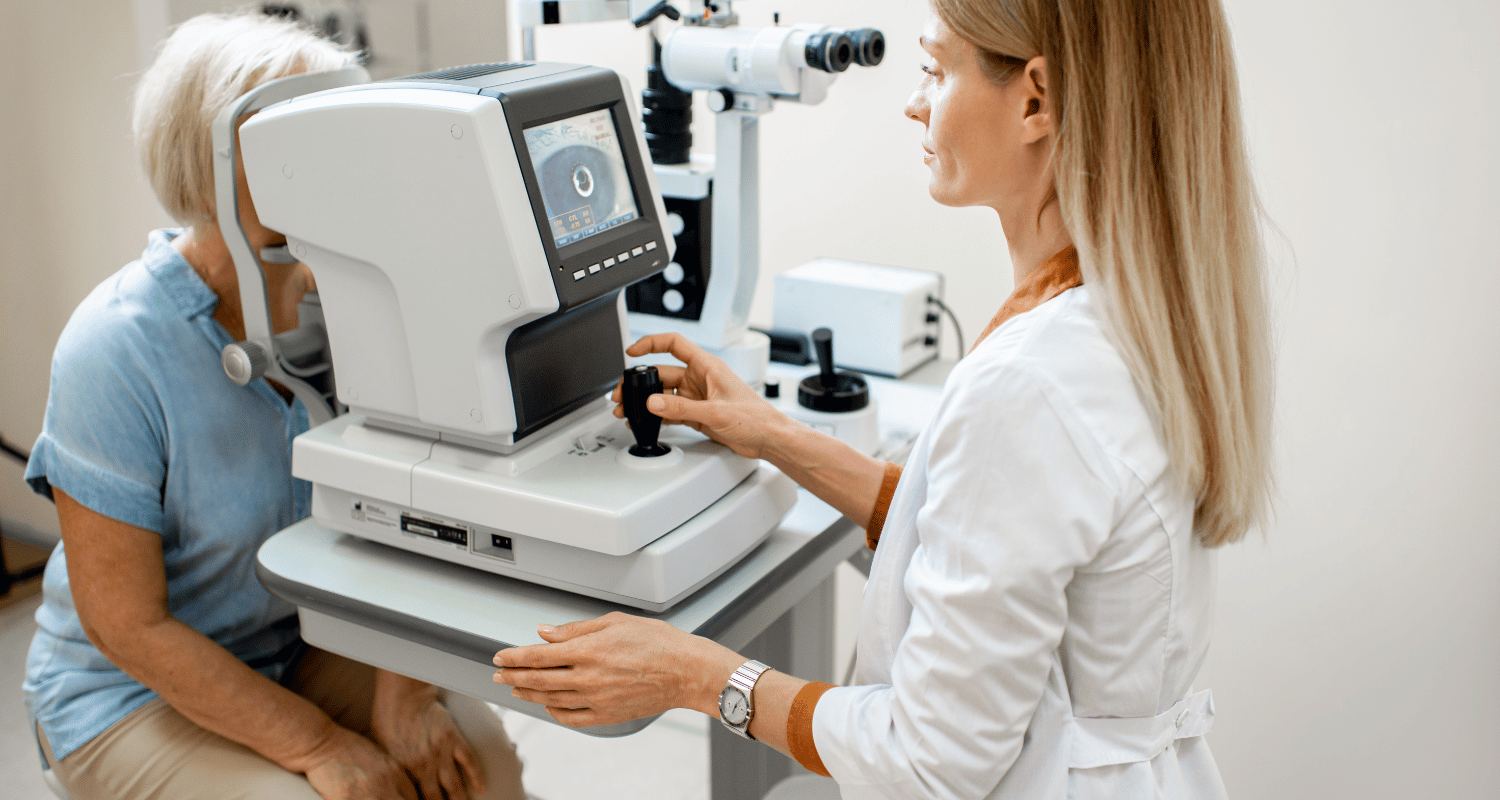
Eye clinics diagnose refractive errors through a series of vision tests and eye examinations. These tests measure visual acuity, determine refractive error, and evaluate the overall health and structure of the eye. Accurate diagnosis helps doctors recommend the most suitable treatment for improving visual clarity.
Treatment and Vision Correction Options
Several treatment options are available for correcting refractive errors. Glasses and contact lenses are the most common solutions, while many patients choose laser vision correction procedures such as LASIK or SMILE for long-term improvement. The most appropriate treatment depends on factors such as the severity of the refractive error, corneal thickness, and the patient’s lifestyle.
Importance of Regular Eye Examinations
Regular eye examinations are important for detecting and monitoring refractive errors. Vision can change over time, especially during childhood and early adulthood. Routine eye checkups allow doctors to adjust prescriptions and ensure that vision problems are properly managed.
Final Thoughts
Myopia, astigmatism, and hyperopia are common vision conditions that can significantly affect daily life if left uncorrected. With proper diagnosis and appropriate treatment, most people can achieve clear and comfortable vision while maintaining good eye health.
You might also like